

Many people have heard of Berthoud Pass and Loveland Pass, and some people even know that they were named after Captain E.L. Berthoud and William A.H. Loveland. But it wasn’t these men who got their hands dirty and built the roadways.
This article celebrates some of the more colorful people who helped to build these pathways over the divide.
The Convict Crews of Loveland Pass
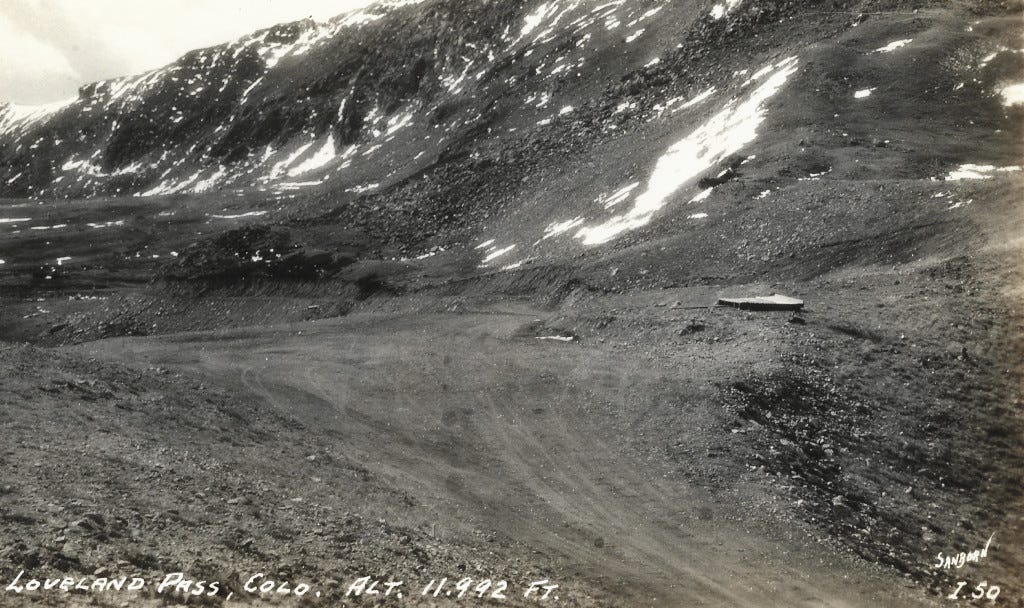
Who really built Loveland Pass? Basically everyone. There were community fundraisers, volunteer crews, state-funded crews, and at one point, the governor even assigned a group of workers from the state prison in Cañon City to work on a modern version of the pass.
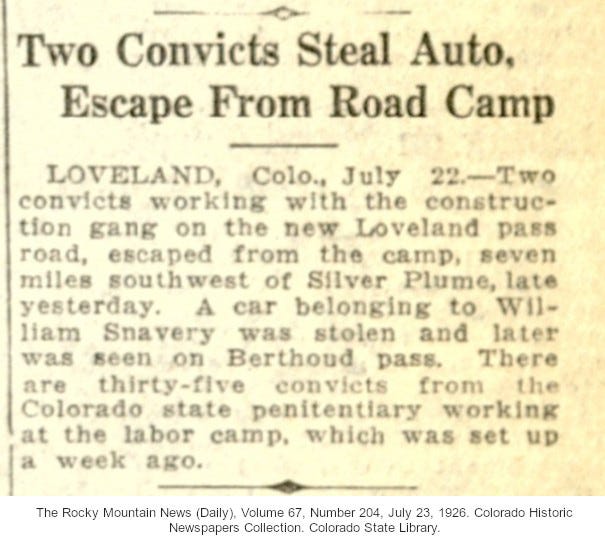
A group of 35-50 convicts began working here in the summer of 1926.
How well did that go?
Two of them were spotted on Berthoud Pass in a stolen automobile in July.
William Hepburn Russell - Embezzlement, The First Pony Express & Berthoud Pass
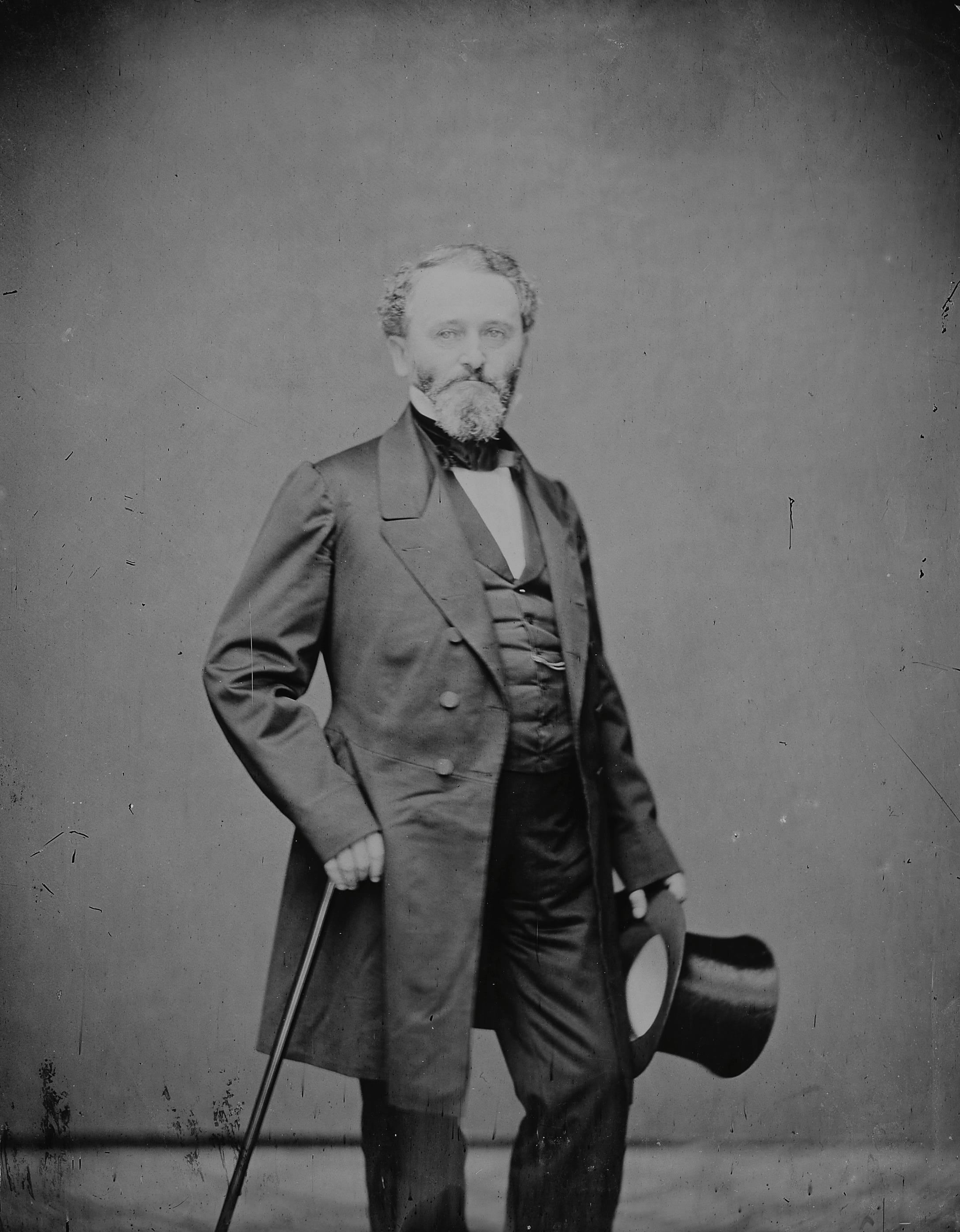
One night in 1859, W.H. Russell sat at Williard’s Hotel (now known as The Willard InterContinental, Washington, D.C.), pitting himself against a group of Atlantic & Pacific Railroad stockholders. He felt that they had bribed members of Congress in order to obtain a mail contract. He bet them $100k that he could run a postal service that would transport mail from St Joseph, MO to San Francisco, CA in 10 days. That $100k bet turned into $200k, with the extra $100k coming from the Secretary of War and Ben Holladay (a well-known figure in the western transportation industry at the time).
Russell would go on to win that wager. He used approximately 60 horses and 125 men. He stationed the horses 10 to 20 miles apart. The final rider made it across the line in San Francisco with only 7 minutes remaining (ref).
This was the beginning of the first Pony Express mail service in the U.S. The route ran just to the north of Colorado.

The desire for a shorter route between Denver and Salt Lake eventually brought Russell and others to the area now known as Berthoud Pass.
Just before the Civil War broke out, Russell was indicted for embezzling funds from the Indian Trust Fund, a crime for which he confessed.
The Civil War prevented him from ever being prosecuted.
He would go on to be one of the driving forces behind Berthoud Pass’s initial construction in 1861 and 1862. After Capt. Berthoud did a survey of Berthoud Pass in the spring of 1861, he was hired by Russell’s company to survey a route over the pass all the way to Salt Lake.
William Cushman - More Embezzlement, The Banking Business, and the Berthoud Pass Toll Road
The following bulletin was issued by the U.S. Marshalls in 1878.
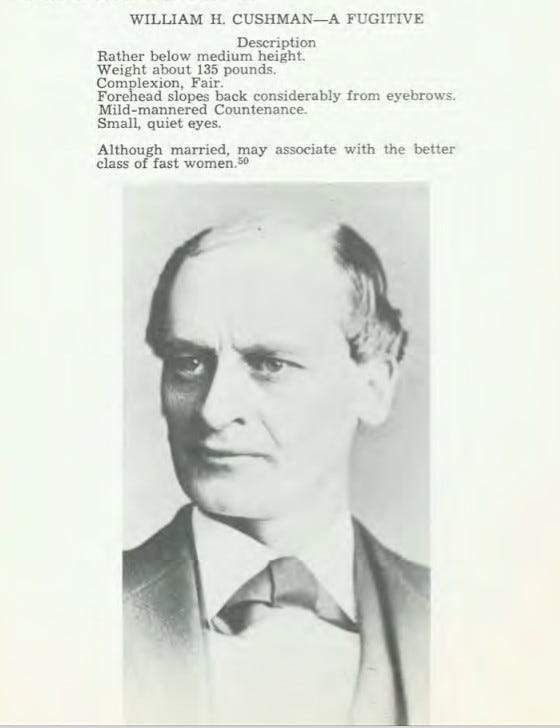
William Cushman’s credentials included: President of the First National Bank in Georgetown, and Treasurer of the Georgetown, Middle Park and White River Wagon Road Company, which completed Berthoud Pass in 1874. Cushman also ran a profitable toll road over Berthoud Pass after it was completed.
He may have even operated the toll house below, which sat downvalley from Berthoud Pass, in Empire, CO.
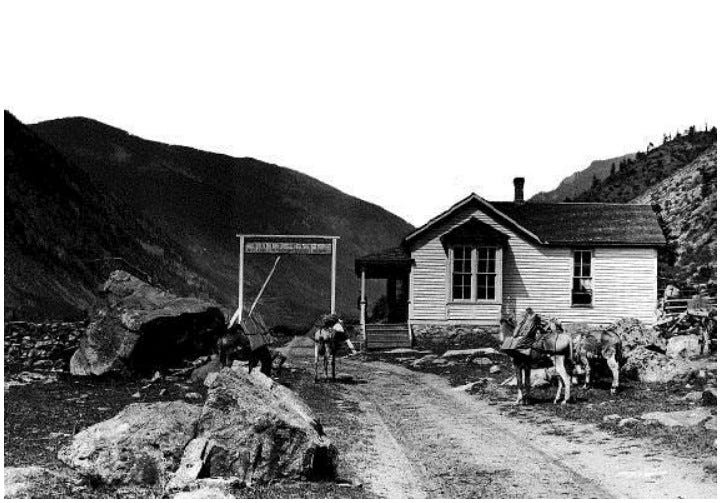
He was accused of embezzling funds at the bank a few years after the road opened.
The toll road was sold at a sheriff’s auction, and a U.S. Marshal was assigned to track Cushman down. There were reports that he was spotted in Kansas City in 1877. He was known to have spent a significant amount of time in his hometown of Ottawa, Illinois, while on the run in the following years.
He was apprehended in New York City in 1880, and brought back to Colorado.
His trial began in 1881. As it drew into 1882, Cushman was “granted leave to renew his bail”. After that, the case just sort of went away. In 1883, a nolle prosequi was entered into the case docket, and that was the end of it.
Cushman died in 1886.
References: